Search
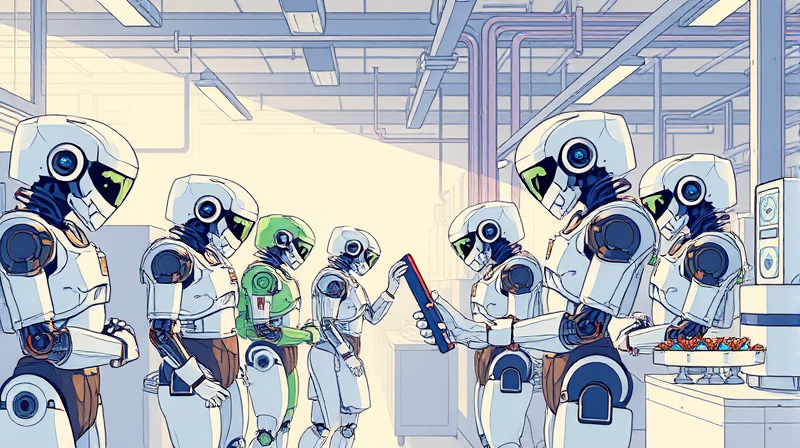
In today's rapidly evolving world, robotics and automation are no longer mere tools but transformative forces reshaping entire industries.
They herald a new era where efficiency, productivity, and innovation converge to solve some of humanity's most pressing challenges.
The global adoption of these technologies is reaching an all-time high, creating waves of change that touch every corner of the economy.
As we stand on the brink of a technological revolution, understanding how robotics and automation drive efficiency gains is crucial for businesses and individuals alike.
This article explores the profound impacts, from market growth to workforce collaboration, offering insights and inspiration for a future powered by intelligent machines.
The global robotics market has surged to unprecedented levels, reflecting widespread adoption and investment.
In 2023, the market value for industrial robot installations hit a record US$16.7 billion, showcasing robust economic confidence.
Currently, over 4.28 million industrial robots are operational worldwide, with annual installations exceeding 541,000 units.
Asia leads this charge, accounting for 70% of new installations, while the U.S. boasts a significant operational stock.
Key statistics highlight the market's vitality:
This growth is not just about numbers; it signals a shift towards smarter, more integrated industrial ecosystems.
Robotics and automation are delivering tangible productivity gains across various sectors.
Global robot density in manufacturing has more than doubled since 2016, reaching 246 robots per 10,000 employees.
This surge correlates with significant efficiency improvements, as 75% of companies report that automation boosts their operational speed.
Safety has also seen remarkable enhancements, with AI-enabled robots reducing factory accidents by up to 25%.
In warehouses, the use of Autonomous Mobile Robots (AMRs) increased by 60% between 2020 and 2022.
These metrics underscore how automation is transforming traditional workflows into streamlined processes.
The data paints a clear picture: automation is a key driver of competitive advantage.
Robotics and automation are making strides in diverse industries, each with unique applications and benefits.
The automotive sector remains a leader, accounting for 35% of global robot installations.
However, expansion is evident in electronics, metals, and food & beverage sectors.
Retail has seen AI-powered service robots generate $3.6 billion in revenue.
In healthcare, AI eldercare robots have reached 4.3 million units, addressing critical care needs.
Financial services are leveraging autonomous fraud detection systems that operate 24/7.
This table illustrates the broad reach of automation, highlighting how tailored solutions address specific industry challenges.
For instance, in life sciences, automation solves labor and sanitation issues effectively.
Emerging technologies are pushing the boundaries of what automation can achieve.
Collaborative robots, or cobots, now represent about 80% of new industrial robot installations.
AI-powered automation is set to dominate decision-making by 2026, enabling systems to learn and adapt dynamically.
Hyperautomation integrates AI, machine learning, and data analytics for end-to-end optimization.
Low-code platforms empower non-technical users to create automated workflows easily.
Key trends include:
Vision and force sensing technologies are simplifying robot teaching methods.
These innovations ensure that automation becomes more accessible and adaptable to evolving needs.
The financial benefits of robotics and automation are compelling for businesses of all sizes.
80% of companies achieve return on investment within 12 months of implementation.
Robotic Process Automation (RPA) delivers significant cost reductions and operational efficiencies.
Over three years, organizations expect substantial savings from intelligent automation strategies.
Manufacturers are increasingly focusing on total cost of ownership, considering factors like maintenance and energy use.
This financial upside makes automation a strategic priority for growth-oriented firms.
Contrary to fears of mass job loss, robotics and automation are fostering a new era of human-robot synergy.
Automation may displace around 92 million jobs by 2030, but it will create a net gain of 78 million globally.
Robots often augment human capacity, enabling safer work and extending careers.
By 2026, collaborative automation will see bots handling routine tasks, freeing employees for creative roles.
This shift addresses labor shortages, particularly in repetitive or low-skill areas.
The goal is not replacement but enhanced productivity through smart partnership.
Government policies are accelerating the adoption of robotics and automation worldwide.
The CHIPS and Science Act in the U.S. provides $50 billion for semiconductor R&D, driving demand for automation in fabs.
The Inflation Reduction Act offers credits for clean-energy production, boosting robotics in energy sectors.
Reshoring efforts have announced over 244,000 manufacturing jobs in 2024, increasing need for robotic systems.
These initiatives support long-cycle orders for automation technologies.
Such support underscores the strategic importance of automation in national economies.
The future of robotics and automation promises even greater adaptability and integration.
By 2026, systems will become context-aware, leveraging predictive analytics and edge computing.
Automation will anticipate changes, moving beyond reactive to proactive solutions.
Costs are dropping, making smart robotic solutions more accessible to diverse businesses.
This evolution enables companies to scale automation alongside changing needs.
Key outlook points include:
Embracing this future offers a sustainable path to innovation and competitiveness.
As we move forward, the synergy between humans and machines will redefine what's possible.
Let this inspire you to explore how robotics and automation can transform your own endeavors.
References