Search
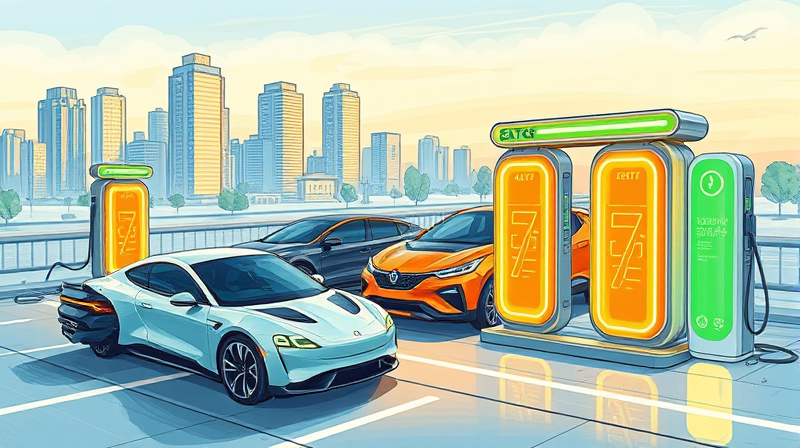
The dawn of 2026 heralds a transformative era in electric mobility.
Battery technology is evolving at an unprecedented pace, promising to reshape our energy landscape.
With groundbreaking advancements in safety and efficiency, the future is bright and electric.
This revolution extends beyond cars to grid storage and renewable energy integration.
It offers a sustainable path forward for our planet.
Embrace the change as we explore the innovations set to dominate.
Solid-state batteries (SSB) are the flagship of this new age.
They replace liquid electrolytes with solid materials for enhanced performance.
Key specs include energy densities reaching 375Wh/kg and 600–1,000+ km driving range.
Charging speeds are dramatically faster, with 10–15 minutes for 80% charge.
These batteries also boast 5,000+ charge cycles and lower fire risk.
Companies like Toyota and QuantumScape are leading mass production efforts.
Lithium-iron-phosphate (LFP) 2.0 batteries are being reinvented with new features.
They incorporate manganese for increased range and better heat resistance.
This makes them ideal for budget vehicles and fleet applications.
Sodium-ion batteries use abundant sodium instead of lithium.
They are perfect for stationary grid storage and entry-level EVs.
Hybrid chemistries, such as KISS super capacitors, offer even higher performance.
These can store 60% more energy per kilogram and charge in seconds.
Innovations in battery architecture are crucial for better performance.
Cell-to-Pack (CTP) 3.0 eliminates module layers to reduce weight.
It also provides 15–20% better cooling and lowers production costs.
Cell-to-Chassis (CTC) Integration merges batteries into the vehicle frame.
This offers higher rigidity for better crash safety and more interior space.
24M's Electrode-to-Pack (ETOP) Design is a game-changer.
It allows up to 80% of pack volume for energy storage.
This enables 50% more range without increasing pack size.
Prototypes are being tested for future road availability.
Safety is paramount in next-gen batteries.
AI-driven predictive battery safety systems monitor real-time data.
They track temperature spikes and internal gas formation.
This transforms batteries into smart, self-protecting power systems.
Breakthroughs in chemistry and AI have matured for rollout.
LG Energy Solution and Panasonic are leaders in safety innovation.
Consumer outcomes include 100% safer batteries with near-zero fire risk.
This ensures peace of mind for all users.
Ultra-fast charging is becoming a reality.
Targets include 10–15 minute charge times to 80%.
Advanced systems can achieve 3-12 minutes for replenishment.
800-volt architectures enable rapid charging with good thermal management.
Wireless charging technologies are in testing phases.
They feature pads in roads or garage floors.
Vehicle-to-Grid (V2G) integration allows EVs to support the grid.
This adds flexibility during peak hours.
Innovations from Kiel University and Xiaomi push limits further.
They aim for even faster charging and longer ranges.
2026 EVs will offer impressive capabilities.
These include 700–1,000 km real-world range and near-zero fire risk.
Cold-weather performance spans from -30°C to 45°C.
This ensures reliability in diverse climates.
Such advancements make EVs practical for daily use.
They support long-distance travel without compromise.
Batteries are vital beyond vehicles.
2026 recognizes energy storage as a flexible power source.
It adds capacity near high-demand areas efficiently.
Long-duration storage and safety-driven procurement are key trends.
Alternative chemistries are scaling for grid applications.
This supports renewable energy and grid stability.
AI data centers drive demand for reliable systems.
Batteries must execute advanced grid functions seamlessly.
Regulations are tightening globally.
The EU, UAE, India, and U.S. mandate stricter safety rules.
These focus on thermal runaway prevention and recycling.
Consumer demand emphasizes non-flammable designs and durability.
People want faster charging without risk and temperature stability.
These drivers accelerate innovation and adoption.
They ensure that new technologies meet high standards.
Ongoing research fuels future advancements.
MIT's Coupled Ion-Electron Transfer (CIET) technology redefines reactions.
It creates more powerful and faster-charging batteries.
Silicon anode enhancements allow faster lithium-ion transfer.
These form the scientific foundation for 2026 breakthroughs.
They promise continuous improvement in battery performance.
The next generation of battery technology is transformative.
It powers the electric revolution with unmatched capabilities.
By 2026, we will see safer, more efficient energy solutions.
This change supports a sustainable and innovative future.
Embrace it as we move towards cleaner mobility.
References