Search
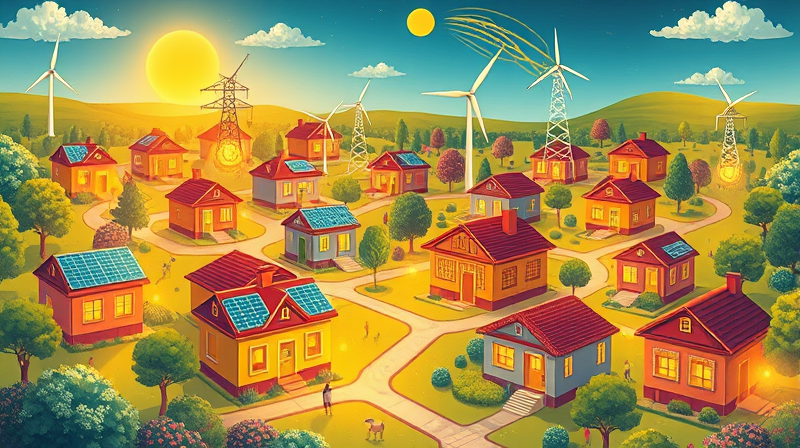
In an era of increasing power demands and environmental concerns, the shift towards localized energy solutions is not just a trend but a necessity for a resilient future. Microgrids represent a transformative approach that empowers communities and businesses to take control of their energy destiny.
By generating, storing, and using electricity onsite, these self-contained networks offer a path away from the vulnerabilities of centralized grids.
This article explores how decentralizing power investments can enhance reliability, drive economic savings, and foster sustainability, providing practical insights for anyone looking to embrace this innovative energy model. Energy independence is now within reach for those willing to invest in local solutions.
Microgrids are defined as self-contained networks that operate independently from the main grid during outages or peak demands. Unlike traditional systems reliant on large power plants, they integrate renewable sources, battery storage, and smart controls.
This allows for autonomous operation, ensuring continuous power when it's needed most. Distributed energy resources are key to this functionality, making microgrids a scalable solution for modern energy needs.
The advantages of microgrids extend across multiple domains, from enhancing reliability to promoting green energy. Energy resilience and reliability are paramount, as microgrids can isolate from the main grid during disturbances, providing power to critical facilities like hospitals.
This reduces vulnerability to large-scale outages and natural disasters.
Economic value and cost savings are equally compelling. Local generation gives control over energy costs, while surplus power can be sold back to the grid for revenue.
Renewable energy integration is seamless with microgrids, facilitating the use of solar, wind, and biomass. This supports decarbonization goals and reduces greenhouse gas emissions.
Moreover, grid stability and efficiency are improved by generating power close to users, minimizing transmission losses.
Microgrids are highly scalable, using intelligent controls to communicate with the main grid while maintaining efficient operations. Current technologies make it possible to achieve all key benefits, including resilience and cost reduction.
Autonomous operation without a master controller reduces commissioning and maintenance costs, making this a viable option for various settings.
Despite the benefits, several hurdles must be addressed. Technical challenges involve complex integration of decentralized resources into existing grids, requiring advanced management systems.
Regulatory and policy barriers stem from structures designed for centralized power, with inconsistent rules hindering adoption.
Financial and infrastructure constraints include high upfront costs and scalability demands, which can be daunting for many users.
Social and equity considerations must be managed to prevent exacerbating disparities, ensuring fair access to these technologies.
Decentralized microgrids enable peer-to-peer trading, where 'prosumers' produce and consume energy, trading surpluses directly. This model cuts out middlemen, reducing costs and increasing renewable use.
Smart contracts and blockchain platforms facilitate this trading, giving consumers more choice over their energy sources.
Microgrids are valuable across various sectors, from data centers to remote areas. Data centers benefit from enhanced reliability and sustainability, using renewables to power operations.
In remote locations, microgrids provide critical access where the main grid is limited.
The evolution of decentralized energy promises increased grid flexibility and innovation. Emerging technologies will transform how we produce and manage energy, fostering community empowerment and economic growth.
Policy evolution, such as net metering, will support this shift, creating jobs and stimulating local economies.
Investing in microgrids and decentralized energy is a strategic move towards a resilient, sustainable, and economically sound future. By localizing power investments, we can build communities that thrive independently, reducing our carbon footprint and enhancing energy security.
This journey requires overcoming challenges, but with current technologies and growing support, the path is clear. Take the first step today to explore how microgrids can transform your energy landscape, ensuring a brighter tomorrow for all.
References