Search
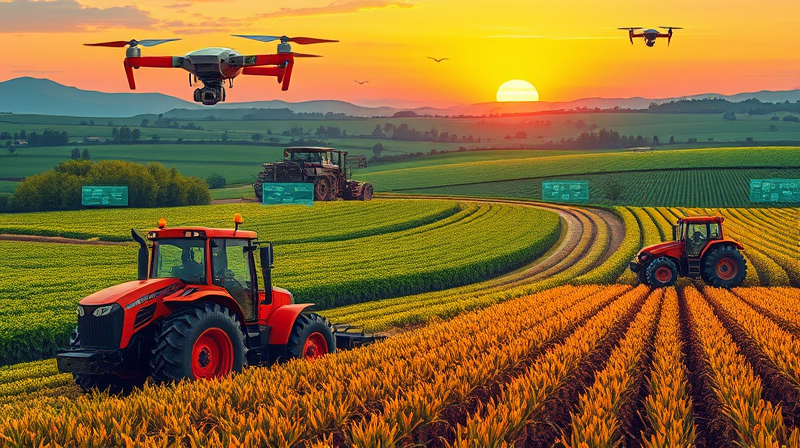
Imagine a world where every seed planted, every drop of water used, and every ounce of fertilizer applied is optimized to perfection.
This is the promise of precision agriculture, a farming revolution that harnesses cutting-edge technology to address the urgent need for global food security.
By managing variability within fields, it ensures resources are used efficiently, boosting yields while protecting our planet.
As populations grow and climate pressures mount, investing in this approach is not just smart; it's essential for a sustainable future.
At its heart, precision agriculture is about tailoring farming practices to the unique conditions of each plot of land.
It relies on three fundamental principles that guide its implementation.
These principles transform traditional farming into a data-driven, efficient operation.
The backbone of precision agriculture is a suite of interconnected technologies that monitor, map, and manage agricultural operations.
This technological integration enables farmers to make informed decisions that enhance productivity.
By combining these tools, farmers can achieve unprecedented levels of control over their operations.
Precision agriculture delivers measurable advantages that extend from the field to the global food system.
For instance, autosteer technology can cut inefficiencies by maintaining precise paths, while VRT limits inputs to zones that truly need them.
Despite its potential, precision agriculture faces hurdles that must be addressed to ensure widespread adoption.
By investing in education and infrastructure, we can help more farmers harness these innovations.
For those inspired to embrace this revolution, here are actionable steps to begin the journey.
This gradual approach makes the transition manageable and impactful.
Looking ahead, precision agriculture is set to evolve with even more sophisticated technologies.
These advancements promise a future where farming is not only more productive but also more resilient.
Examples like Syngenta's Cropwise AI demonstrate the practical impact of precision agriculture.
This tool uses machine learning and agronomic data to provide tailored recommendations for input applications.
Similarly, USDA initiatives have shown how yield maps and VRT can boost efficiency on various farm sizes.
By learning from such successes, farmers can adopt best practices to enhance their own operations.
Precision agriculture is more than a technological trend; it's a vital investment in our planet's future.
By embracing this approach, we can grow more food with fewer resources, safeguarding both livelihoods and the environment.
Let us champion innovation and collaboration to build a food-secure world where every farm thrives through smart, sustainable practices.
References